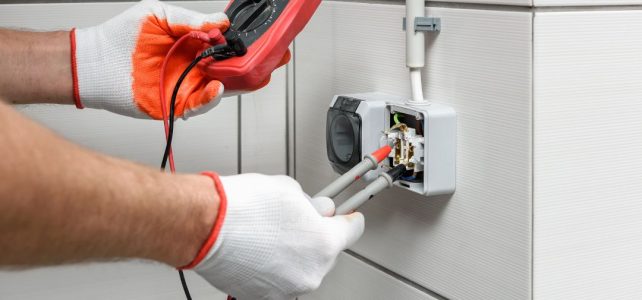
Do you have any electrical work that needs to be done in your home? Whether it’s a simple job like replacing a light switch or something more involved such as wiring a new circuit, it is important to take the necessary precautions. Not only for your own safety but also for the safety of those around you.
The first step in any electrical work should be to shut off the power at the main breaker box. Make sure that you know how to properly reset the circuit breakers, and check with a voltage tester that it has been successfully disconnected from all sources of electricity.
When working with wiring, always make sure that the wires are properly insulated and covered in order to prevent accidents. Also, avoid using extension cords and power strips unless absolutely necessary.
When installing electrical fixtures or outlets, it is important to make sure that they are properly grounded with the appropriate ground fault circuit interrupter (GFI). This is to ensure that any electrical current is safely directed away from the body in case of an accidental shock.
It is important to inspect all electrical work before turning the power back on. Make sure that all connections are secure and double-check for any potential shorts in the wiring.
Whether you’re a DIYer or a professional Wollongong electrician, it’s important to take the necessary precautions when doing electrical work in the home. Electrical work can be dangerous if not done correctly, so here are a few tips to consider before starting any project:
1. Make sure you understand what type of electrical system is in your home. If you’re not sure, consult a professional electrician for help.
2. Always turn off the power before starting any electrical work. Make sure all switches and circuit breakers are turned off in the area where you’ll be working, and double-check that they stayed off when you’re done.
3. Use the right tools and materials for any project. Make sure you know exactly what type of wiring and switches etc. are used in your home, and use these same types when replacing or adding electrical fixtures.
4. Wear safety gear such as protective eyewear, gloves, long sleeves, and shoes with non-conductive soles.
5. Double-check your work before turning the power back on. Make sure all wiring is connected correctly and that no bare wires are exposed.
6. If you’re replacing an outlet, make sure to attach a self-grounding outlet to prevent shocks from occurring.
7. Don’t overload outlets. Make sure that the total wattage of any device plugged into an outlet doesn’t exceed its amperage rating.
8. If you’re unsure about anything, contact a professional electrician for assistance.
By taking these simple precautions, you can ensure that any electrical work done in the home is done safely and correctly. Remember, safety first!









 The different investment strategies have their nuances and broad points of contact, therefore, completely objective and sharp divisions can not be made between the different methodologies that apply to the selection of assets. However, there are some differential characteristics that are more pronounced in some cases.
 Regarding the qualitative characteristics of the business, it is vital that it has strong competitive advantages, that is, tools to protect itself from competition. Competitive advantages can be based on scale factors, a differentiated brand or patents on different technologies, for example. In fact, it is common for high quality companies to combine different kinds of competitive advantages at the same time.
 High quality stocks also tend to have a good record of dividend payments and share repurchasing, which shows that the profits are transparent and that the business generates enough cash to finance its operations and also distribute funds to its shareholders.